

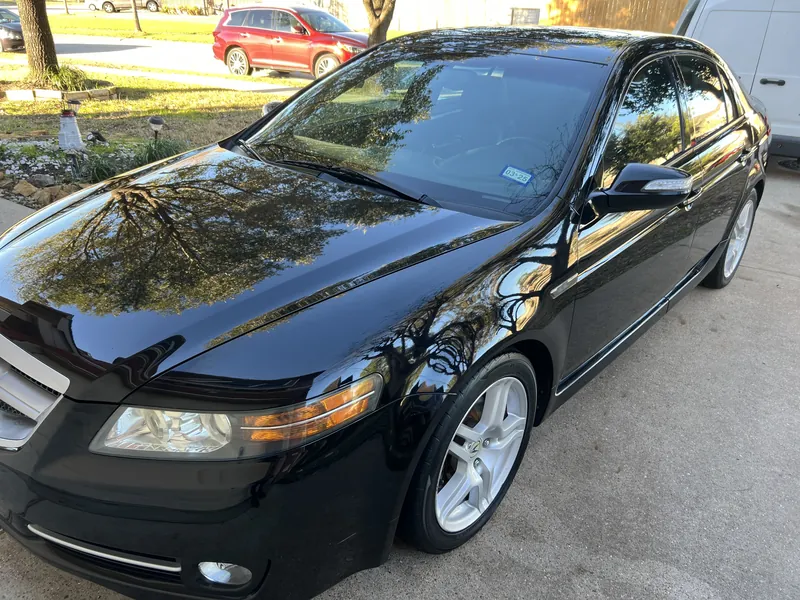
Shop for paint correction in Houston and you'll see a lot of numbers: "50% defect removal," "70%," "90%+," even "97%." Azul doesn't publish one. That isn't because we're hiding anything. It's because a percentage doesn't answer the question you're actually asking, which is: what will my paint look like afterwards, and is it safe to get there?
Here's what those numbers usually mean, why we don't use them, and what we show you instead.
What the market advertises
In September 2026 we reviewed 13 Houston-area paint correction pages, plus several well-known national ones. Seven of the 13 Houston pages advertised a removal percentage. The pattern was consistent across the market:
- Single-step correction: usually around 50% to 70%
- Two-step correction: usually around 70% to 90%
- Multi-step correction: usually 90% and up, with one page claiming 97%
Look closer and the numbers don't line up. The same level of work carries very different figures from one business to the next, and at least one mobile service advertised 90% or more from a two-step correction, a result other pages attach to multi-step work. When the same service is sold with such different numbers, that's a sign they're marketing figures rather than measurements.
Problem one: a percentage of what?
Almost none of those pages say what the figure is a percentage of. It could mean:
- the number of individual defects removed
- the share of the paint's surface that looks clear afterwards
- how much less visible the swirls are, judged by eye
Each gives a different answer on the same car. And under what light? Swirls show most in direct sun at a reflecting angle, or under a single bright inspection light. The same panel can look nearly perfect in the shade of a garage and heavily swirled in the afternoon sun. A number without a method can't be checked, by you or by anyone else.
Problem two: the same work gives different results on different paint
Even with a clear definition, one number can't be true for every car, because paint varies:
- Hardness varies by make, color and year. Experienced detailers don't even agree on which brands have hard or soft paint. One well-known guide calls German finishes harder, another says German clear coats are softer than American ones, and a third says there's no reliable rule by make at all. The practical answer is to test a section on every car, which is what we do.
- Defect depth varies. Swirls from a car wash sit near the surface. A scratch from a branch may go through the clear coat. The same correction removes one and only reduces the other.
- Paint thickness varies. Factory paint thickness differs by make and by panel, and repainted panels are different again. Two cars with identical swirls can need two different plans.
The same step can make a dramatic difference on one car and a modest one on the next. Neither result fits a fixed percentage.
Problem three: some damage isn't in the percentage at all
A removal percentage suggests that everything is on a scale, and that more work moves you further along it. It isn't. Polishing works by leveling the clear coat down to the bottom of a defect. It can't add paint back. So some problems are outside what any level of correction can fix:
- Rock chips need touch-up or a paint repair.
- Dents need paintless dent repair, if the paint isn't broken.
- Scratches through to primer or metal need touch-up or refinishing.
- Peeling, flaking, cloudy or failing clear coat needs refinishing, including "oxidation" that is really clear coat breaking down.
- Orange peel, the texture in the paint itself, needs full-panel sanding and polishing, which we don't do.
If your car has any of these, a headline percentage tells you nothing useful about them. We'd rather tell you at the photo assessment. The full list, with what does fix each one, is in the honest-limits section of our paint correction page.
Problem four: chasing a number costs clear coat
This is the part that matters most for your car. On a typical factory finish, the clear coat is only about 35 to 50 microns thick, thinner than a sheet of printer paper. Every correcting pass removes some of it, and what's polished away doesn't grow back; it can only be restored by refinishing. I-CAR, the collision-repair industry's training organization, warns that removing too much can cause hazing, discoloration, peeling and finish failure. Clear coat is also part of what protects the color underneath from UV.
A fixed promise can create pressure to keep polishing until the number is met, whether or not that paint has clear coat to spare. Our priority runs the other way. Azul puts paint preservation ahead of chasing 100% defect removal. If further polishing would compromise your clear coat, we stop and explain why.
What we show you instead
An honest expectation before you book
Send photos, and we'll reply with the level we recommend, the price and what's realistic for your paint, by defect type, not as a single number: swirls that are usually correctable, scratches that may only improve, and anything polishing can't fix.
Paint-thickness readings
Before any polishing, we measure paint thickness across the metal panels. A standard gauge reads the total paint down to the metal. It can't isolate the clear coat on its own, but it reveals thin spots and repainted panels, which is where we go gentler.
A test section you see with your own eyes
We tape off part of the hood, usually a quarter to a third, correct one side of the tape line and show you the before and after. If Two-Stage might be needed, we correct one test section each way, side by side, and you choose how we proceed. That comparison, on your paint, in your light, tells you more than any published number.
Proof labeled honestly
Our before-and-after photos on the paint correction page are real Azul jobs, and the captions say when the light, angle or day changed between shots. One of them shows a limit on purpose: a Jaguar XK whose clear coat was beginning to fail. A controlled One-Step Paint Correction removed the haze and improved the look, and a ceramic wax was applied to help preserve the finish. But polishing can't repair clear coat that's breaking down; the lasting fix is refinishing. We said so before we started.
Questions to ask any detailer
Whoever you choose, these questions separate a careful correction from a sales number:
- If you quote a percentage, a percentage of what, and judged under what light?
- Will you measure my paint's thickness before polishing?
- Will I see a test section before you do the whole car?
- What will you do if a panel is thin or has been repainted?
- What on my car can't be fixed by polishing?
Azul's paint correction, in brief
Azul's mobile paint correction comes to your home or office anywhere in greater Houston. One-Step Paint Correction starts at $549, Two-Stage Paint Correction at $749, and Multi-Stage Paint Correction is custom-quoted, before applicable tax. Your price depends on vehicle size, how many defects there are and how deep they go, and your paint's thickness and any repaints, and it's confirmed before any work starts. No correction level promises a percentage of defect removal.
See what's realistic for your paint
Text 4–6 photos to 713-386-9945: front and rear three-quarter views, plus close-ups of the worst areas in direct sun or with a flashlight at an angle. Include your vehicle's year, make and model and any repaints or body work. We'll tell you what's realistic before you spend anything. The assessment is free, with no obligation. Want to check a scratch yourself first? Try the fingernail test, and see where it goes wrong.