

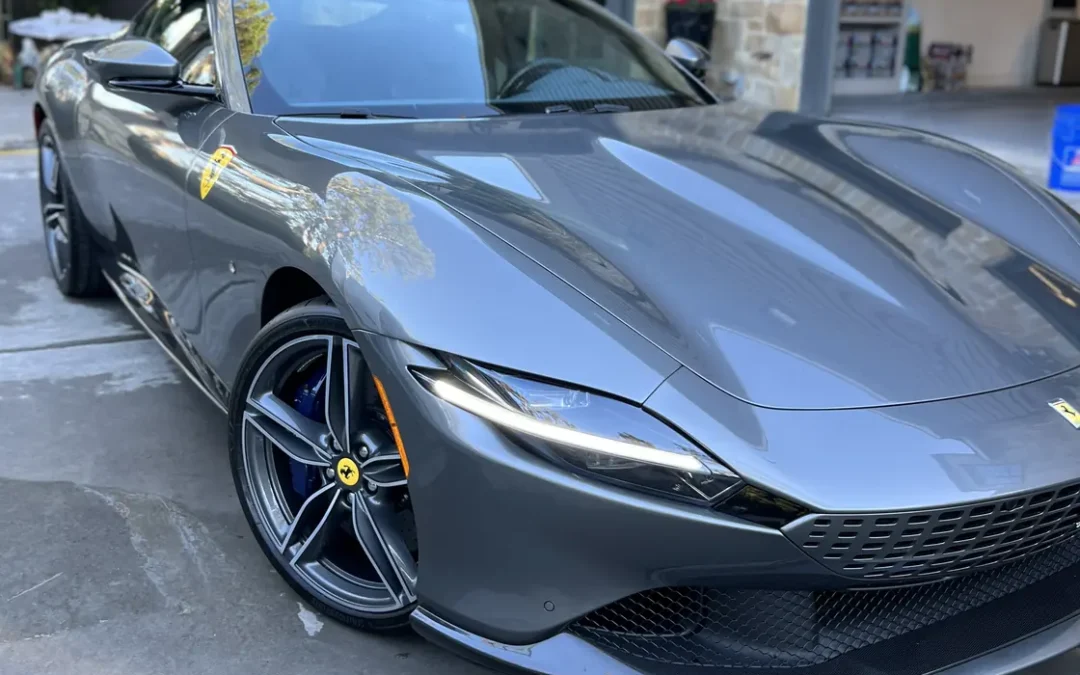
If you're protecting a new car, or one you've just had corrected, you'll quickly run into the ceramic coating or paint protection film (PPF) question. They're often sold as rivals, and a shop that sells film has an obvious incentive to recommend it. Azul applies ceramic coating; at the moment, we don't install PPF or vinyl wraps. So this is a straight explainer: what each one does, what neither can do, and how to decide.
What sits on top of your paint
Both add a layer over your factory paint. The difference is thickness, and that changes everything about what they're good at.
- Ceramic coating is very thin. It forms a slick layer that can't be peeled off, and it wears slowly over the years.
- Paint protection film is a thick, clear film, roughly 150 to 200 microns (6 to 8 mil). That's several times thicker than the typical factory clear coat underneath it, and it's built to absorb impacts.
What a ceramic coating is good at
- Water beads and sheets off, so washing is easier
- Deeper gloss on the paint you already have
- Resistance to chemicals, UV and contamination
- It can also go on glass, wheel faces, trim and lights
What it won't do: stop rock chips. It also won't make paint scratch-proof, remove existing swirls or scratches, or stop water spots caused by neglect or the environment.
What paint protection film is good at
- It absorbs rock chips and road debris
- Many films self-heal light scratches with heat
- A professional can remove it later
- It's usually applied to high-impact areas, such as the bumper, hood and mirrors, or to the whole car
What it won't do: change the color (that's a vinyl wrap). Like a coating, it doesn't hide what's underneath, and it still needs correct washing.
What they have in common
Both are an extra layer over factory paint. Both help against bird droppings, sap and bugs. Both should be professionally installed. And neither replaces regular, correct washing: hand washing with a pH-neutral shampoo, clean microfiber, and getting bird droppings, bugs and water spots off quickly.
Why Azul doesn't install film
Not because there's anything wrong with film. PPF is good protection, and for the right car it's the right choice. We simply don't install it at the moment; today our work is paint correction, ceramic coating and detailing, done at your home or office. The upside for you is that we have no film to sell, so when film is the right answer for your car, we'll say so and tell you how to sequence it with our work.
What we recommend, by what you care about
You want gloss, easier washing and long-term protection
That's what a ceramic coating is for. Azul's 3-Year Ceramic Coating starts at $895 and covers the paint, exterior trim, headlights and taillights. The 5-Year, from $1,099, adds exterior glass and wheel faces, and the 8-Year, from $1,345, has our longest-lasting paint coating. Every package includes decontamination, paint-thickness measurements and a Paint Enhancement polish before we coat. Prices are starting prices, before applicable tax.
The 3, 5 or 8 years in the package name is how long the coating is designed to protect coated paint with proper maintenance; sun, washing habits and upkeep all affect real-world results. Each package comes with a written Azul warranty matched to its term, with full terms on your warranty card, and coverage depends on documented coating maintenance at least every 6 months.
Rock chips are your main worry
Then a coating alone isn't the answer, and we'll tell you that. If you drive a lot of highway miles, or you've just bought a car whose front end you want to keep chip-free, film on the high-impact areas is the product designed for it. Have it installed by a specialist film installer.
You want both
Film and coating work well together: film for chip protection on the impact areas, and a coating for easier washing and a slick finish on top of the film and on the rest of the paint. Two things matter:
- Film needs a coating made for film. A paint coating isn't automatically the right product for the film's surface.
- Get the order right. At least one major film manufacturer's installation guidelines require that no ceramic coating has been applied to the paint where film will go. If you plan film, have it installed before the paint underneath is coated, and tell us about it when you book.
Whichever you choose: correct first
A coating or film is a clear layer. It doesn't fill or hide swirls; it locks in whatever the paint looks like underneath, and under a glossy layer, defects can look even more obvious. So the order is: correct, then protect.
Every Azul coating package already includes a Paint Enhancement polish for gloss and clarity. If swirls or scratches bother you, paint correction replaces that step, so you don't pay for both: One-Step from +$249, Two-Stage from +$449, or Multi-Stage by custom quote. If you're having film installed elsewhere, correct the paint first for the same reason.
Already have film on the car?
Azul can polish existing PPF. It's quoted from photos as PPF polishing, not as a paint correction level, because film is a different surface from clear coat.
One example: a Tesla with about seven-year-old film that had gone hazy and dull, with swirls, light scratches, stains and some yellowing. Polishing in 2025 restored its clarity and reduced the yellowing, though not completely. Yellowing inside the film doesn't always polish out, and when it doesn't, the film needs replacing. We'll tell you what's realistic from your photos before we start.
The short version
- Coating: gloss, easier washing, resistance to chemicals and contamination, across the whole car. Not chip protection.
- Film: chip and scratch protection where it's applied. Installed by a film specialist, not by Azul.
- Both: film on the impact areas, a film-safe coating on top, and the rest of the car coated. Correct first, film second, coat last.
Not sure which your car needs?
Request a free coating assessment and text 4–6 photos to 713-386-9945. Tell us how you drive the car, where it's parked and whether it already has film. We'll recommend the right plan, including when that means film from someone else, and send your quote before anything is booked. No obligation.